Mind & mood
Guided imagery for anxiety
Your body doesn't fully distinguish between a vividly imagined scene and a real one. Guided imagery uses that quirk on purpose, to bring your nervous system somewhere calmer, without going anywhere at all.
The short answer
Guided imagery is picturing a calm, detailed scene (a beach, a forest, still water), engaging as many senses as you can. Research shows this activates the parasympathetic nervous system, the body's "rest and digest" state, which lowers heart rate, eases tension, and reduces stress hormones. It works in as little as five minutes, anywhere.
Why imagining a place can calm a real body
When you vividly picture a scene, the sound of the water, the warmth of the sun, your brain doesn't fully separate "imagined" from "real." It responds to the image the way it would respond to actually being there. That's why picturing a serene lake can measurably slow your heart rate and loosen your shoulders, even though nothing around you has changed.
This shifts you out of "fight or flight" and into the parasympathetic "rest and digest" state, the same direction as slow breathing, just through a different door.
How to try it
- Get comfortable. Sit or lie down, and let your eyes close if that feels okay.
- Pick a place. Real or imagined: a beach, a quiet forest trail, a room that feels safe. Anywhere calm works.
- Add the senses, one at a time. What do you see? What do you hear? Is there a temperature, a smell, a texture under your hand?
- Let your body follow. Notice your shoulders drop, your breath slow. You're not forcing relaxation, you're letting the scene do some of the work.
- Stay as long as it helps. A minute or ten, both count.
A trick for anxious thoughts specifically
Picture putting a worry into a balloon and watching it drift up and away, or setting it on a leaf and letting a stream carry it off. It sounds simple because it is; the image creates real distance between you and the thought.
If you can't "see" it clearly
That's fine, and common. You don't need a sharp mental picture for this to work. Leaning on one or two senses, the imagined sound of waves, the imagined warmth of sun, still engages the same calming response. Some people picture vividly; others sense more than they see. Both work.
Building a scene that actually works
- Pick somewhere with no mixed associations. A childhood beach house tied to a hard memory won't calm you, even if it should. A place that's simply and uncomplicatedly pleasant, real or entirely invented, works better than one loaded with meaning.
- Go specific, not generic. "A beach" is vague and hard to hold onto. The exact shade of the water where it turns from pale to deep, the particular sound of one wave, gives your attention somewhere real to land. Specificity is what makes a scene work, not scale.
- Let intrusive thoughts pass through rather than fighting them. Your mind will wander back to whatever you're anxious about, that's normal, not a sign you're doing it wrong. Just return to the scene without any self-criticism, the way you'd return to a breath count. Expect to do this several times in one session.
Tools for this in the app
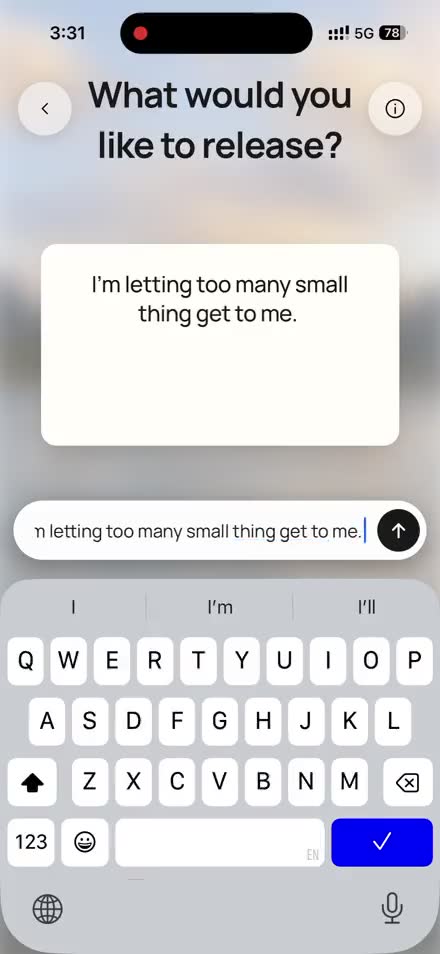

A calm scene, guided.
Guided Imagery walks you through a scene step by step, so you don't have to build it from scratch when your mind is racing.


Common questions
Does guided imagery actually work for anxiety?
Yes, research shows it activates the parasympathetic nervous system, the body's "rest and digest" state, lowering heart rate, easing muscle tension, and reducing cortisol. Vividly imagining a scene engages the brain and body similarly to actually experiencing it.
What if I can't visualize things clearly?
You don't need a perfectly vivid mental picture for it to help. Engaging even one or two senses (a sound, a temperature, a smell) still activates the same calming response. Some people picture more, others sense more; both work.
How long does guided imagery take?
As little as five minutes can help, and it can be done anywhere. Longer sessions of 10 to 20 minutes tend to deepen the effect, but a short version is still worthwhile on a busy day.
What if my mind keeps wandering during guided imagery?
That's normal, not a sign it isn't working. When you notice you've drifted back to a worry, return to the scene without judging yourself, the same way you'd return to a breath count in meditation. Expect this to happen several times in a single session — the returning is part of the practice, not a failure of it.
Not medical advice. This is a general wellness tool, not treatment. If anxiety is persistent or intense, a therapist can help. In crisis, contact your local emergency number or a crisis line.