Connection
Feeling disconnected? How to reconnect with the people who matter
When you're struggling, the instinct is to pull inward, and that's exactly when connection helps most. Here's how to start when face-to-face feels like too much.
The short answer
When you feel disconnected, start smaller than a conversation. Instead of forcing a call or a meetup, send one short text, recall a good memory, or look at a photo of someone you love and name one thing you'd say to them. The goal is simply to point your attention outward, then build from there.
The withdrawal loop
It usually goes like this: you feel anxious or low, so reaching out feels like too much, so you pull back, and being more alone makes the anxiety worse, which makes you withdraw further. Isolation feels safe in the moment. But it quietly feeds the exact feeling you're trying to escape.
Why connection matters more than we think
We're wired for it. Strong social ties are one of the most consistent predictors of wellbeing there is, and chronic loneliness takes a real toll on both mind and body. Reaching toward someone gets you out of your own head, and getting out of your head is half the battle with anxiety, which runs on rumination. Even brief, low-stakes moments of contact (a few words with a neighbor, a smile with a barista) measurably chip away at loneliness.
Start smaller than a conversation
Here's the key: you don't have to start with the hard thing. In-person, face-to-face contact can feel like way too much when you're depleted, so don't begin there. Begin with the smallest possible reach:
- One text: "thinking of you." That's a complete gesture.
- A memory of a good moment with someone, brought to mind on purpose.
- A photo of someone you love, and one thing you'd say to them if they were here.
The point isn't to fix your whole social life today. It's to point your attention outward, at one person who matters. That's the muscle. You build from there.
Build, rebuild, strengthen
- Build: one small new thread, a reply, a shared link, a "how are you, really?"
- Rebuild: a low-stakes reach toward someone you've drifted from. No big apology required. "You crossed my mind today" is enough.
- Strengthen: tell someone what they mean to you. People rarely hear it enough.
Start simple. Then build from there.
"It's been too long" and "I'll be a burden"
These two thoughts stop more reconnection than anything else, and both are worth questioning directly. Most people significantly overestimate how awkward reaching out after a gap actually feels to the other person, "too long" is almost always a story your own withdrawal is telling you, not something the other person has been keeping score of.
"I'll be a burden" tends to run backward from the truth. Being asked how you're doing, being told someone thought of you, is rarely experienced as a burden by the person on the other end, it's usually the opposite. If you're worried about being a burden, that's often a sign you'd want the same reach extended to you.
If you're starting from close to zero
If there isn't really anyone to send a small text to right now, this whole approach can feel like advice for people with an easier problem than yours. That's a real, different situation, and it's still workable, just slower. Low-stakes, structured contact, a class, a regular walk, a recurring group, a volunteering shift, builds the muscle without requiring an existing relationship to lean on. It's a longer road than texting an old friend, but it's the same underlying move: small, repeated, low-pressure contact rather than one big leap into a close relationship.
Reconnect with yourself, too
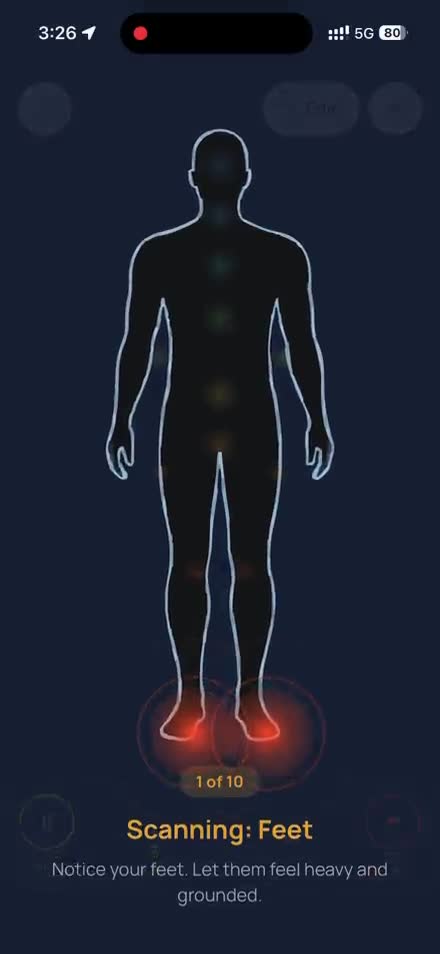
Sometimes feeling disconnected from other people starts with feeling disconnected from yourself. A daily check-in, simply naming how you feel, or a slow body scan can rebuild that inner sense of safety, which makes reaching outward feel a lot less daunting.
Tools for this in the app

A gentle place to start.
The Connection tool gives you a small, low-pressure nudge to reach out, a place to begin when you want to but don't know how.


Common questions
Why do I isolate myself when I'm anxious or down?
It's a common loop: anxiety or low mood makes reaching out feel like too much, so you withdraw, which leaves you more alone, which feeds the anxiety. Isolation feels safer in the moment, but it usually deepens the very feeling you're trying to escape.
How do I reconnect when reaching out feels hard?
Start smaller than a conversation. Don't aim for a call or meeting up, send one short text, share a memory, or look at a photo of someone you love and name one thing you'd say to them. The goal is to point your attention outward. Build from there.
Why does connection help anxiety?
We're wired for connection, and strong ties are one of the most consistent predictors of wellbeing. Reaching toward someone gets you out of your own head and interrupts the rumination anxiety runs on. Even a small, one-sided gesture can shift how you feel.
What if I'm afraid I'll be a burden by reaching out?
That fear tends to run backward from the truth. Being asked how you're doing, or told someone thought of you, is rarely experienced as a burden by the person on the other end, it's usually the opposite. If you're worried about being a burden, that's often a sign you'd want the same reach extended to you.
Not medical advice. If withdrawing has become persistent, you're isolating for weeks, or it's tied to depression, please reach out to a professional; that's a strong move, not a weak one. In crisis, contact your local emergency number or a crisis line.