Mind & mood
Self-compassion: how to stop being so hard on yourself
You'd never talk to someone you love the way you talk to yourself. The research is clear on this: being harder on yourself doesn't produce more change. Being kinder does.
The short answer
Self-compassion means treating yourself the way you'd treat a friend, with kindness instead of criticism. It has three parts: self-kindness (gentleness instead of harshness), common humanity (remembering struggle is part of being human, not a personal failing), and mindfulness (noticing pain without exaggerating or burying it). Research shows this, not self-punishment, is what actually predicts change.
Why "being harder on myself" backfires
It feels logical: crack down on yourself, and you'll finally get it together. But research on self-compassion, led largely by psychologist Kristin Neff, finds the opposite. Self-criticism tends to trigger shame, and shame makes people avoid, hide, and give up, not improve. Self-compassion, meanwhile, is linked to more resilience and more motivation to actually try again, not less.
You are worth it to the people in your life, whether or not you can fully feel that right now, the hard part is usually seeing your own worth, not earning it.
The three parts of self-compassion
Self-kindness
Talk to yourself the way you'd talk to someone you love, especially when you've fallen short. Not empty positivity, just the basic gentleness you'd extend to anyone else struggling.
Common humanity
Struggling isn't a sign that something is uniquely wrong with you. It's part of being human. Remembering "everyone is trying, and everyone stumbles" pulls you out of the isolating feeling that you're failing alone.
Mindfulness
Notice the pain without exaggerating it into a catastrophe or burying it and pretending it's fine. Just: this hurts, and that's real.
Three small ways to practice it
- A hand on your heart. When self-judgment shows up, place a hand over your heart, or give yourself a brief, gentle squeeze on the arm. The physical warmth registers before the words do.
- Name it plainly. "This is a hard moment. Hard moments happen to everyone." Simple, out loud or in your head.
- Ask the friend question. "What would I say to someone I love who was going through this?" Then say that to yourself.
You don't have to believe it first
You don't need to feel worthy of kindness before you offer it to yourself. Do the small thing anyway, the hand on the heart, the plain sentence. The feeling tends to follow the practice, not the other way around.
Self-compassion isn't the same as self-esteem
Easy to conflate, and worth separating. Self-esteem is largely built on comparison, doing well, being liked, coming out ahead, which makes it unstable by design: it rises when you succeed and falls hard when you don't. Self-compassion doesn't depend on any of that. It's available on your worst day exactly as much as your best one, which is why it holds up in the moments self-esteem usually collapses.
What it sounds like, applied to a real moment
The three parts are easy to agree with and harder to use mid-moment. Here's what they actually sound like applied to something ordinary, say, you snapped at someone you care about:
- Self-kindness: "That wasn't my best moment, and I can also see I was exhausted, it makes sense I frayed." Not an excuse, just accuracy.
- Common humanity: "Everyone loses their patience with someone they love sometimes. This doesn't make me a bad partner, parent, or friend."
- Mindfulness: "I feel genuinely bad about this, and that discomfort is appropriate, not something to spiral about or bury."
Then, separately, repair the moment if it needs repairing. Self-compassion doesn't skip accountability, it's what makes accountability survivable enough to actually follow through on.
Reconnect with what's actually true about you
Self-criticism has a way of erasing the good and magnifying every flaw. Push back on purpose: write down a few things that are genuinely good about you, even if it feels awkward. Meeting your own face with kindness, out loud, is a small, strange, and surprisingly effective way to remember your own worth.
Tools for this in the app
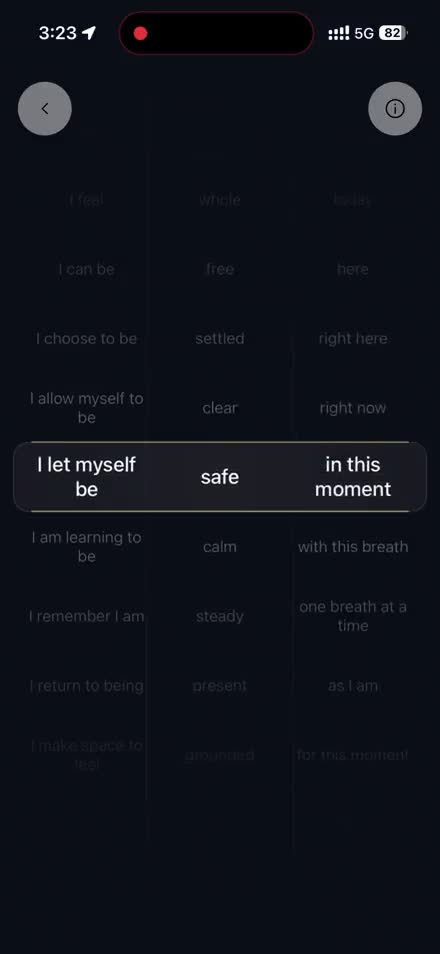
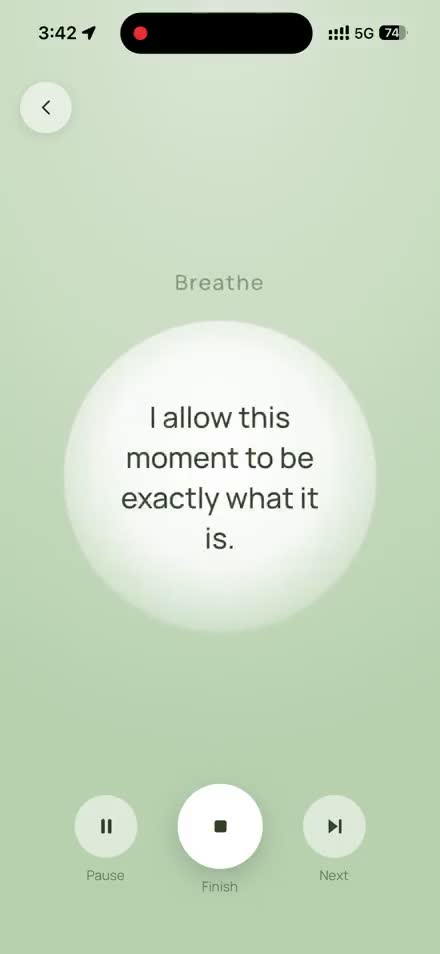
Kinder, on repeat.
Mirror and Mantra are built for exactly this, steady, self-compassionate words, ready when the inner critic gets loud.


Common questions
Does self-compassion make you lazy or let yourself off the hook?
No, research finds the opposite. Self-compassion predicts better outcomes than self-criticism, including more motivation to change, not less. Self-criticism tends to trigger shame and avoidance, which stalls change; self-compassion reduces the fear that keeps you stuck.
What are the three parts of self-compassion?
Self-kindness (gentleness instead of harshness), common humanity (struggling is part of being human, not a personal failure), and mindfulness (noticing pain without exaggerating or suppressing it), as defined by psychologist Kristin Neff.
How do I practice self-compassion when I feel like I don't deserve it?
Start small and physical, not with belief. A hand on your heart, or saying "this is a hard moment" out loud, works even before you feel worthy of it, the practice builds the feeling over time, not the other way around.
Is self-compassion the same as self-esteem?
No. Self-esteem is largely built on comparison and success, so it rises and falls with how well you're doing. Self-compassion doesn't depend on that, it's available on your worst day exactly as much as your best one, which is why it holds up in moments self-esteem usually collapses.
Not medical advice. This is general education, not treatment. If self-criticism feels relentless or is tied to depression, a therapist can help. In crisis, contact your local emergency number or a crisis line.