Reframing
How to stop negative thoughts
You can't win a wrestling match with your own mind. When a negative thought or an urge has you in its grip, the way out isn't to fight it, it's to redirect, release, reframe, and reconnect.
The short answer
You usually can't stop a negative thought by fighting it, that only grips it tighter. What works is to redirect your attention (toward the present, and toward the people who matter most), release the thought instead of wrestling it, reframe it into something truer and kinder, and reconnect with your own worth. A slow breath first settles the body so the mind can shift.
Why fighting a thought makes it louder
Try not to think of a white bear. You just did. Psychologists call this the ironic process, the harder you push a thought away, the more it pushes back. On top of that, your brain has a built-in negativity bias: hard thoughts stick harder than good ones. So "just stop thinking about it" is doomed from the start.
The move isn't to delete the thought. It's to change your relationship with it, in four steps. But first, one breath.
Settle first
A racing mind rides on a revved-up body. Before anything else, take a physiological sigh, two inhales, one long exhale. It drops your nervous system a notch so the rest is possible.
1. Redirect: toward what's real
You can't focus on your senses and spiral at the same time, so give your attention somewhere better to go. Come back to the present with a quick grounding exercise, and then go one step further: turn toward the real power in your life, the people you love.
Negative thoughts shrink your world down to you and the problem. Picturing a person who matters, or actually reaching out to them, breaks that tunnel vision. It reminds you what's actually true and what actually matters.
2. Release: let it move through you
A thought you're gripping can't pass. So loosen your hold. The fastest way is to get it out of your head and onto the screen: a brain dump empties a racing mind, and writing the thought down, then watching it dissolve, teaches your body that you can let it go. You are not your thoughts; you're the one noticing them.
3. Reframe: answer it, truer and kinder
Don't argue with the thought and don't blindly cheerlead against it. Answer it with something that is both true and kinder. "I always mess everything up" becomes "I'm struggling with something hard right now, and I've gotten through hard things before." This is cognitive reframing, the heart of CBT. Keep the reframe believable; a mantra you don't buy will just bounce off. (More on that in our guide to calming mantras.)
4. Reconnect: with your own worth
Negative thoughts almost always attack the same target: your sense of your own value. So the last move is to reconnect with it. Meet your own face, steadily, kindly, the way you'd look at someone you love, and let yourself remember your own beauty and your own power. Say the steady words out loud. This is self-compassion, and the research is clear that treating yourself like a friend does more for a hurting mind than criticism ever will.
All four steps, on one real thought
Principles are easy to agree with and hard to apply mid-spiral. Here's what the sequence actually looks like against something ordinary: "I completely messed up that presentation and everyone noticed."
- Redirect. Instead of replaying it, name three things in the room right now, then picture someone who matters and what you'd tell them if they'd had the same day.
- Release. Write it out in full, messy and unfiltered: what happened, what you're afraid it means, what you're afraid people think. Let it sit on the page instead of looping in your head.
- Reframe. Not "it was actually great" (unbelievable, will bounce off), but "one part didn't go how I wanted, and one rough presentation isn't the same as failing at my job." Truer, and kinder.
- Reconnect. Look at your own face, or picture someone who loves you, and let the fact that you're allowed to have an off day be real, not just a line you're saying.
When the thought is actually true
Not every hard thought is distorted. Sometimes "I handled that badly" or "I need to change something here" is accurate, and reframing an accurate thought into something softer isn't relief, it's avoidance wearing a nicer outfit. The test is simple: does the thought point to something you can act on, or is it just repeating itself with no new information? If there's a real action, skip the reframe and go straight to it, "I need to apologize" or "I need to prepare differently next time" resolves faster than any amount of gentler self-talk about it.
Tools for this in the app
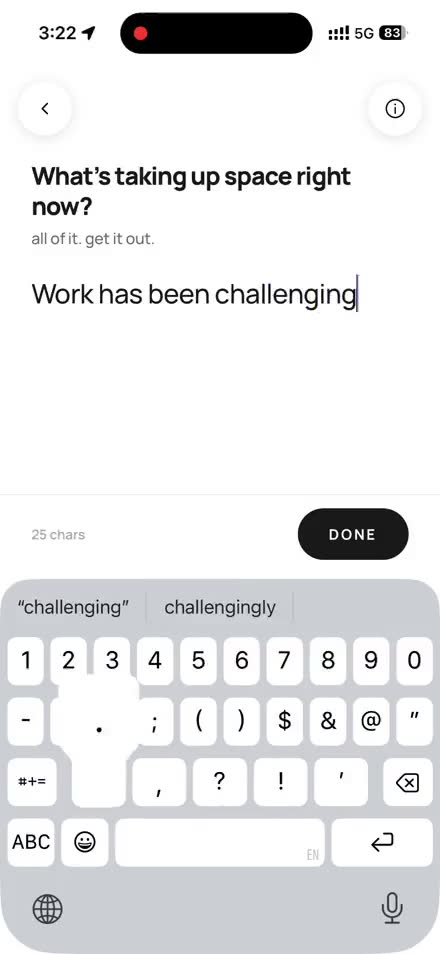
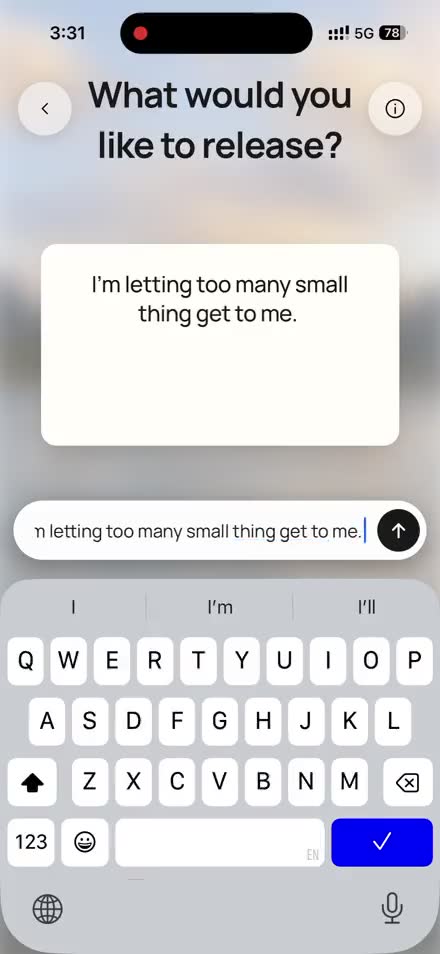

A way back, in four moves.
Connection, Brain Dump, Release, Mantra, and Mirror, the tools for redirecting, releasing, reframing, and reconnecting, guided step by step.


Common questions
Why can't I stop my negative thoughts?
Because forcing a thought away usually makes it stronger, the "ironic process" (tell yourself not to think of a white bear and you'll think of nothing else). Your brain also has a negativity bias, so difficult thoughts stick harder. The fix isn't to stop the thought by force; it's to redirect, release, and reframe it.
How do you reframe a negative thought?
Don't just delete it, answer it with something both truer and kinder. "I always fail" becomes "I'm struggling with something hard, and I've gotten through hard things before." The reframe has to be believable, not blindly positive, or your mind rejects it. This is the core of cognitive reframing in CBT.
Does telling yourself to stop thinking a thought work?
Rarely, thought suppression tends to backfire and bring it back stronger. What works better is shifting your attention onto something real and present (grounding, or the people who matter to you), letting the thought pass instead of gripping it, and reframing it. You redirect the mind rather than wrestle it.
What if my negative thought is actually true?
Then reframing it isn't relief, it's avoidance. The test is whether the thought points to something you can act on or is just repeating with no new information. If there's a real action available, skip the reframe and take it, "I need to apologize" resolves faster than gentler self-talk about the same thing.
Not medical advice. This is general education, not treatment. If negative thoughts are constant, or you're having thoughts of harming yourself, please reach out to a professional.