Mind & mood
How to pause before you react
It never feels like there's a gap between the trigger and the reaction, the sharp word, the slammed door, the thing you regret saying. There is one. It's just very small, and it takes practice to find it.
The short answer
Use the STOP skill from DBT: Stop (freeze, don't act), Take a step back (breathe, create distance), Observe (notice what's happening in and around you without judgment), Proceed mindfully (choose a response that fits your values, not just your first impulse). The first second, simply stopping, is what interrupts the automatic reaction and gives your thinking brain a chance to catch up.
The gap is real, even when it doesn't feel like it
In the heat of the moment, a reaction can feel instant and unstoppable, like there was never a choice at all. But there is a gap, even if it's a fraction of a second: the space between something happening and you deciding what to do about it. The STOP skill, from Dialectical Behavior Therapy, is a way to find that gap and widen it, one deliberate second at a time.
The four steps
- Stop. Don't move, don't speak, don't act. Just freeze for a second. This is the whole trick, everything else depends on this first pause.
- Take a step back. Physically, if you can. Take a breath. Put a little distance, literal or mental, between you and the intensity.
- Observe. What's happening in your body? What's the other person actually saying, underneath the tone? Notice without judging it yet.
- Proceed mindfully. Now choose your response, the one that fits who you want to be, not just the first thing that flared up.
Decide the plan before you need it
It's much easier to commit to "when I feel this rising, I stop" while calm than to invent it mid-argument. Decide the move in advance, and the STOP skill has something to grab onto in the moment.
Why the first second matters most
The instant after a trigger is when the automatic reaction is fastest and strongest, your body wants to act before your thinking brain has caught up. Simply stopping, not solving anything yet, just freezing, interrupts that chain and gives your prefrontal cortex, the part responsible for weighing consequences, a moment to come back online.
Pair it with what settles your body
The pause is easier to hold when your body has something to do besides brace. A physiological sigh in step two, or a quick grounding move during "observe," gives the pause somewhere to land instead of just white-knuckling through it. This is also the same fork described in the Choice Point, STOP is how you actually catch it in real time.
What to say out loud while you're pausing
The four steps happen internally, but you're often standing in front of someone still waiting for a response. A short, honest phrase buys the pause real time without abandoning the conversation: "Give me a second." "I want to answer that well, let me think." "I need a minute before I respond to that." None of these require explaining yourself further, and all of them are more honest than pretending you're fine and reacting anyway.
After the pause: what "proceed mindfully" actually looks like
"Choose a response that fits your values" is easy to say and vague to act on mid-argument. In practice it usually means picking from more than one real option instead of the automatic one: say what's true without its sharpest version, ask a question instead of making a statement, or table it entirely, "I want to come back to this later" is a complete, valid response on its own. The point of the pause isn't to land on the perfect thing to say. It's to have more than one option available at all.
Tools for this in the app
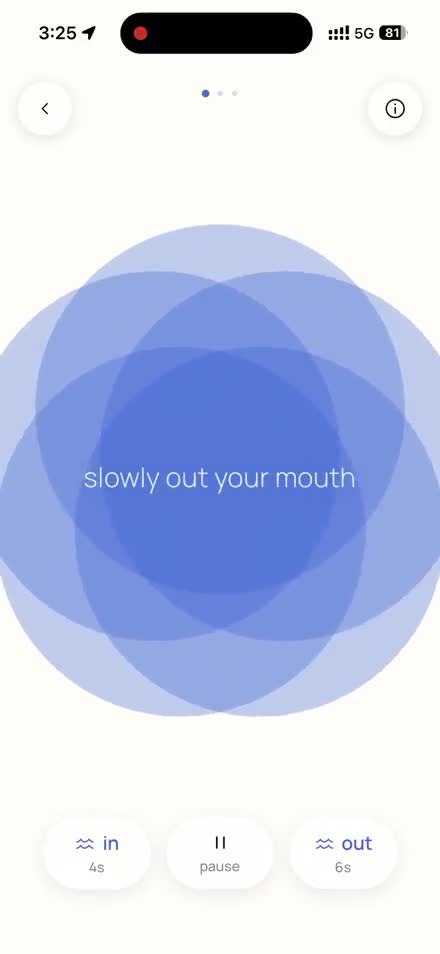
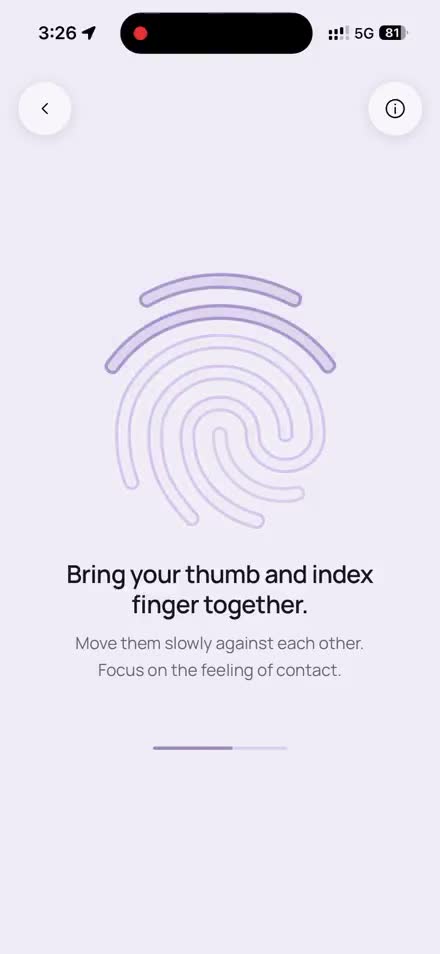
A second of space, on demand.
centered space's breathing and grounding tools are built to fit right into that pause, fast enough to actually use mid-moment.


Common questions
What is the STOP skill?
A four-step DBT technique for interrupting an impulsive, emotion-driven reaction: Stop (don't act), Take a step back (breathe, create distance), Observe (notice what's happening without judging it), Proceed mindfully (choose a response that fits your values).
Why is the first second the hardest?
The moment right after a trigger is when the automatic reaction is strongest and fastest, your body wants to act before your thinking brain catches up. Simply stopping interrupts that chain and gives your prefrontal cortex a moment to re-engage.
Does pausing before reacting actually work for anger?
Yes, even a few seconds allows the initial surge of adrenaline and cortisol to begin settling, which measurably changes what you're capable of choosing next. It won't erase the anger, but it creates space between feeling it and acting on it.
What do I say out loud while I'm pausing mid-conversation?
A short, honest phrase buys real time without abandoning the conversation: "Give me a second," "I want to answer that well, let me think," or "I need a minute before I respond to that." None of these require further explanation, and all are more honest than reacting while pretending you're fine.
Not medical advice. This is general education, not treatment. If anger or reactivity is affecting your relationships or safety, a therapist can help. In crisis, contact your local emergency number or a crisis line.